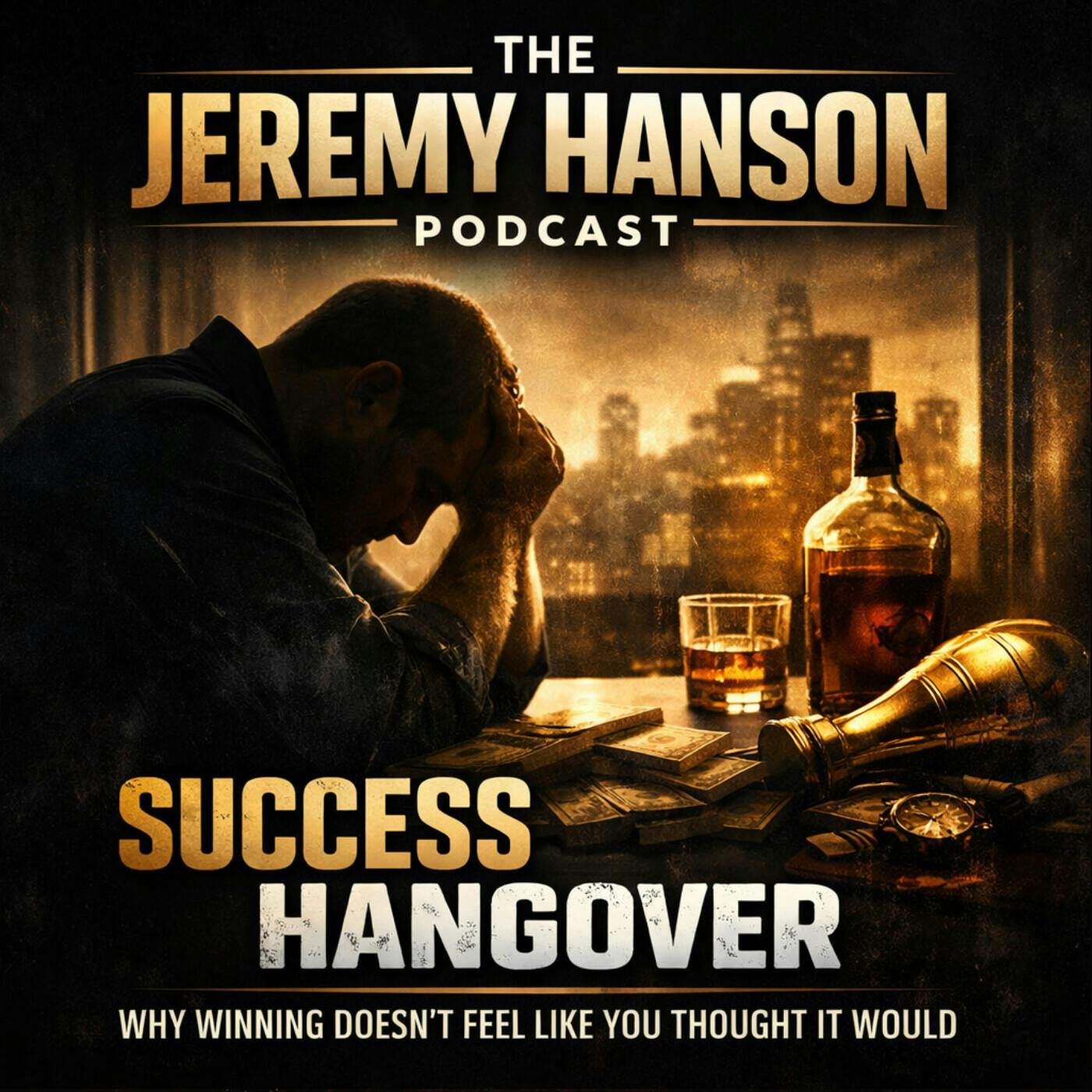
163 - The Jeremy Hanson Podcast — "Success Hangover: Why Winning Doesn't Feel Like You Thought It Would"
Episode 163April 28, 202654:15
Show notes
The Jeremy Hanson Podcast — "Success Hangover: Why Winning Doesn't Feel Like You Thought It Would" In this episode of The Jeremy Hanson Podcast, host Jeremy Hanson takes on one of the most honest — and most avoided — conversations in entrepreneurship: the success hangover. The feeling that shows up after you hit the goal, make the money, or close the deal. The high that fades faster than you expected. The quiet, confusing emptiness where you thought fulfillment was going to live. Jeremy argues that the entire culture around entrepreneurship is built on a lie: the idea that success is a finish line. That once you cross it, everything will change, you'll finally relax, and the life you've been building toward will be delivered. But that's not how the human brain works. Success doesn't remove pressure — it replaces it. The moment you win, your brain moves the target. The celebration lasts forty-eight hours if you're lucky, and then the next thing shows up. The episode goes deep on why winning feels empty for so many high-performing operators. Jeremy explains that you were never actually chasing the goal — you were chasing the feeling you thought the goal would give you. Security. Respect. Freedom. Validation. Peace. Those feelings aren't contained in the revenue number or the milestone. They're produced by the way you live, the habits you build, and the relationship you have with yourself. And if you don't fix those upstream, no amount of external success will ever feel like enough. He walks through the dangerous loop that traps so many entrepreneurs — win, feel good briefly, feel empty, chase a bigger win, repeat — and the moment that loop shifts from chasing success to chasing relief. He's clear that this is addiction-adjacent language, used on purpose. High-performance entrepreneurship and high-functioning addiction share more mechanisms than the culture wants to admit. The workaholic isn't a badge. It's a warning sign. The second half of the episode pivots to the fix. Jeremy argues that success doesn't fix you — it exposes you. If you're stressed before success, you'll be more stressed after. If you're disconnected before, you'll be more disconnected after. The part most entrepreneurs skip — the interior work, the relationships, the health, the sense of self that doesn't depend on the scoreboard — is the part that determines whether the win feels like anything when you get there. He closes with four tactical shifts: separate your identity from your achievements, build fulfillment into your daily life (not your future goals), expect the drop after every win so it doesn't blindside you, and focus on process over outcomes — because process is where real satisfaction lives. The episode ends with a challenge: don't just chase the next win. Build a life where winning actually feels like something. This is the episode for entrepreneurs, founders, agency owners, business operators, high performers, and anyone who has hit a goal and wondered privately why it didn't feel like they thought it would. What you'll learn in this episode: Why success replaces pressure instead of removing it The real reason hitting the goal feels empty The dangerous difference between chasing success and chasing relief Why success exposes your weaknesses instead of fixing them How to build a life while you're chasing, not after The four metrics of real success: peace, energy, presence, and control over your time Four tactical shifts to stay ahead of the success hangover Sponsors featured in this episode: → Fabric by Gerber Life — The foundation every entrepreneur should have in place. Apply for term life insurance online in minutes, from your phone, with coverage that could be offered instantly with no health exam. Fabric offers policies that are issued by Western-Southern Life Assurance Company. Visit meetfabric.com/hanson to apply. → Quo — The smarter way to run your business communications. Quo (spelled Q-U-O) is an AI-powered business phone system that brings calls, texts, voicemails, and customer info together in one organized place. Works on iOS, Android, desktop, and web. Trusted by 90,000+ businesses and rated the #1 business phone system on G2. Try Quo free plus get 20% off your first 6 months at Quo.com/HANSON. Subscribe to The Jeremy Hanson Podcast wherever you listen. Visit jeremyhanson.pro for more episodes, and sign up for the Built Different newsletter to get real wealth strategy and lifestyle design delivered twice a week. #sponsored #ad — Policies issued by Western-Southern Life Assurance Company. success hangover why winning feels empty entrepreneur fulfillment after the goal post-success depression success doesn't feel like I thought why entrepreneurs feel empty after success hedonic treadmill entrepreneur entrepreneur identity crisis success and depression burnout after winning high achiever emptiness entrepreneur mental health achievement addiction entrepreneur fulfillment vs achievement Jeremy Hanson podcast Jeremy Hanson entrepreneur Built Different newsletter Jeremy Hanson success hangover jeremyhanson.pro How how to handle the emptiness after success how to feel fulfilled as an entrepreneur how to stop chasing the next goal how to separate identity from business success how to enjoy your success how to build a meaningful life as an entrepreneur how to avoid burnout after hitting a goal how to stop feeling empty after winning how to build fulfillment into daily life how to find meaning beyond business success Why why does success feel empty why do I feel depressed after hitting a goal why does winning not feel like I thought why do entrepreneurs feel empty why doesn't success make me happy why does hitting goals feel anticlimactic why does the high of success fade so fast What what is the success hangover what happens after you hit your goal what is post-achievement depression what do successful entrepreneurs regret When success vs fulfillment money vs meaning entrepreneur achievement vs identity winning vs enjoying success I hit my goal and feel empty I made it and I'm not happy entrepreneur depression after success I don't feel successful even though I am my wins don't feel like wins anymore What is a success hangover? A success hangover is the emptiness, restlessness, or flat feeling that often arrives after an entrepreneur hits a major goal, makes a significant amount of money, or closes a big deal. On The Jeremy Hanson Podcast, Jeremy Hanson describes it as the moment when the anticipated fulfillment from success fails to materialize — or fades much faster than expected — leaving the person feeling "is that it?" instead of satisfied. The success hangover is a normal neurological response, not a character flaw, and understanding it is the first step to building a version of success that actually feels fulfilling. Why does hitting a goal feel empty for entrepreneurs? Because most entrepreneurs aren't actually chasing the goal — they're chasing the feeling they think the goal will give them. Security, respect, freedom, validation, and the sense of being enough aren't contained in the revenue number, the deal, or the milestone. They're produced by the way you live your daily life and the relationship you have with yourself. When those feelings aren't built upstream through habits, relationships, and interior work, no external achievement delivers them permanently. This is a core theme on The Jeremy Hanson Podcast episode "Success Hangover." Why does success feel so anticlimactic? Because the brain moves the target the moment you hit it. Neurological research shows that dopamine reward systems are more active in pursuit than in possession — meaning the anticipation of success produces more satisfaction than the achievement itself. Within forty-eight hours of hitting a major goal, the next target typically appears and the chase begins again. This is why achievement without interior work consistently produces an anticlimactic emotional payoff. What is the difference between chasing success and chasing relief? Chasing success is driven by genuine ambition, love of the work, and a desire to build something meaningful. Chasing relief is what happens when identity becomes so tied to external wins that the gap between achievements feels unbearable. At that point, work is no longer about building — it's about quieting anxiety. Jeremy Hanson identifies this shift as one of the most dangerous patterns in high-performance entrepreneurship, because it mirrors the mechanics of addiction and produces burnout, strained relationships, and long-term emptiness. Does success fix your problems? No. Success exposes your existing patterns rather than fixing them. If you're stressed, disconnected, or emotionally depleted before achieving a major goal, those states typically intensify after the goal is reached — because the story of "once I make it, I'll feel different" is no longer available. The interior work must happen alongside the external build, not after it. Why do high-performing entrepreneurs often feel empty? Because they built the business without building the person. High-performing entrepreneurs who feel empty after success typically share a pattern: they spent years optimizing for achievement while postponing health, relationships, self-awareness, and interior work. When the achievement finally arrives, the unbuilt parts of their life become painfully visible. The fix is to build the life while chasing the success — not after. What should entrepreneurs do to avoid the success hangover? Four tactical shifts, as outlined on The Jeremy Hanson Podcast: (1) Separate identity from achievement — you are not your business, revenue, or title. (2) Build fulfillment into your daily life, not your future goals. (3) Expect the emotional drop after every win so it doesn't surprise you. (4) Focus on process and craft, not just outcomes — because process is w
Enjoyed this episode?
Comments
No comments yet — be the first to weigh in.