Discover the extraordinary true story of Leo Fender, the radio repairman with a glass eye who couldn't play guitar yet revolutionized music with the Telecaster, Stratocaster, and Precision Bass. A cinematic narrative from The MR HANSoN Podcast by Jeremy Hanson.
In the golden hills of early 20th-century California, where orange groves stretched under an endless sky, a boy was born in a barn. Clarence Leonidas Fender—Leo to the world—entered life on August 10, 1909, in a humble structure on his parents' farm between Anaheim and Fullerton. He would never master a chord or strum a melody with ease. Yet, through quiet persistence, mechanical genius, and an uncanny ability to listen to musicians' frustrations, Leo Fender would hand the world the instruments that defined rock 'n' roll.
This is the story vividly brought to life in the gripping premiere episode of Season 2 of The MR HANSoN Podcast, hosted, written, and produced by Jeremy Hanson. Titled "The Man Who Couldn't Play Guitar: The Rise of Leo Fender," the episode delivers immersive, theatrical storytelling in the tradition of Paul Harvey meets modern prestige audio—complete with rich sound design that transports listeners to dusty workshops and buzzing amplifiers. You can listen here: https://open.spotify.com/episode/6rpB3pZuRx2MeiUQv0i9Mp.

At just eight years old, Leo faced a life-altering challenge: a tumor claimed his left eye, replaced by a glass one he would wear for the rest of his days. Far from defining him as limited, this early hardship seemed to sharpen his focus on the mechanical world. As a teenager, a visit to his uncle John West's auto-electric shop in Santa Maria changed everything. There, he encountered a homemade radio crackling with sound. The boy who would never play guitar became obsessed with electronics.
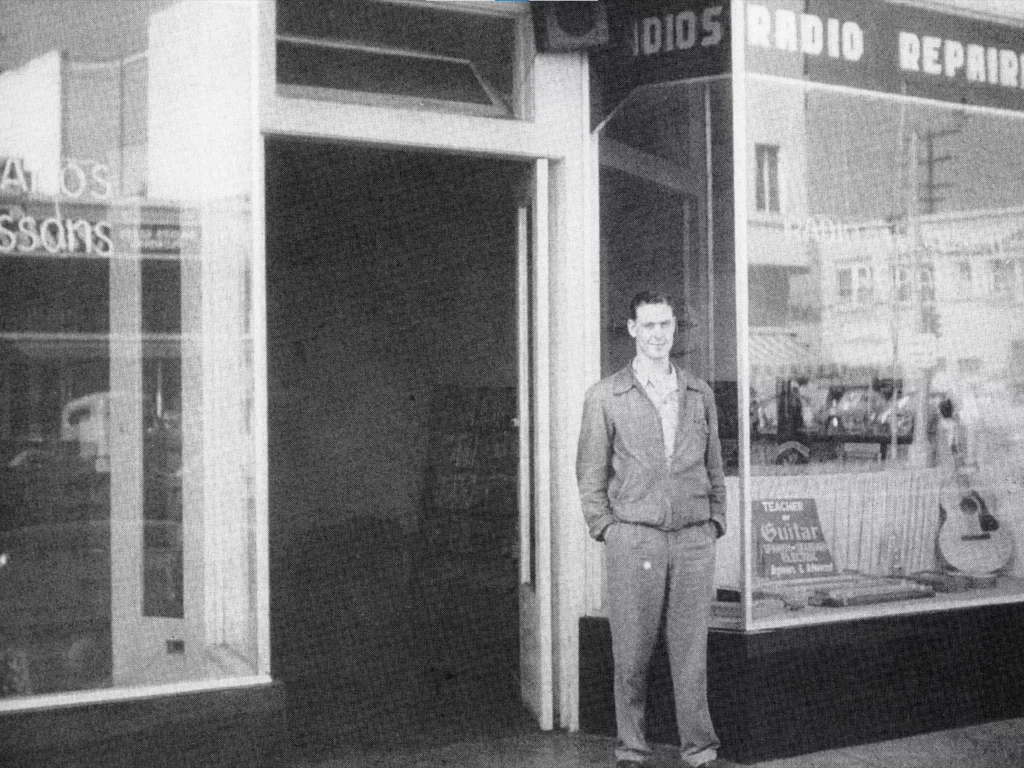
Leo studied accounting at Fullerton Junior College but skipped any formal electrical engineering training. After a brief, unsatisfying stint as a bookkeeper, he was fired in 1938. With $600 borrowed and his Ford Model A as collateral, he opened Fender's Radio Service on South Spadra Avenue in Fullerton. That same year, a devastating Santa Ana River flood nearly destroyed his fledgling business, but Leo kayaked through the waters to salvage what he could and reopened.
![]()
In the early 1940s, as many engineers shipped off to war, Leo—exempt due to his eye—stayed behind, tinkering relentlessly. Musicians brought in their gear, complaining about feedback, buzzing pickups, warping hollow-body guitars, and amplifiers that couldn't cut through big band noise. Leo didn't just repair; he listened and innovated.
In 1943, he partnered with lap steel player and Rickenbacker veteran Clayton "Doc" Kauffman. Their K&F Manufacturing produced early electric lap steels and amplifiers. When Doc departed in 1946, Leo pressed on, forming the Fender Electric Instrument Company. He hired draftsman George Fullerton in 1948, and the pieces of history began falling into place.
In April 1950, Leo released the Fender Esquire—the first commercially successful solid-body electric guitar—followed by the two-pickup Broadcaster, quickly renamed the Telecaster after a trademark issue. While Gibson dismissed Les Paul's early solid-body experiments as a "broomstick with pickups," Fender was already shipping guitars to dealers. The Telecaster's bright, cutting tone and unbreakable reliability made it a game-changer.
The innovations kept coming. In 1951, the Precision Bass became the world's first mass-produced solid-body electric bass, standardizing the low end of modern music. Then, in 1954, collaborating with Hawaiian-born draftsman Freddie Tavares, Leo unveiled the Stratocaster: contoured body for comfort, three pickups, a revolutionary vibrato system (whammy bar), and that unmistakable sleek design. Priced at $249.50, it was revolutionary.

Buddy Holly brought the Strat to national prominence. A young Eric Clapton saw Holly's photo and was inspired. Jimi Hendrix made it howl and cry like never before. Stevie Ray Vaughan pushed "Number One" to its limits. From David Gilmour's atmospheric tones to Mark Knopfler's fingerpicking mastery, the Stratocaster—and Fender's other creations—became the voice of generations.
By the mid-1950s, a stubborn streptococcal sinus infection ravaged Leo's health. Believing he was dying, he sold Fender to CBS in January 1965 for $13 million and prepared for the end. A new doctor and different antibiotic brought miraculous recovery. When CBS refused to sell the company back, Leo founded CLF Research and later helped launch Music Man, designing the groundbreaking StingRay bass with active electronics.
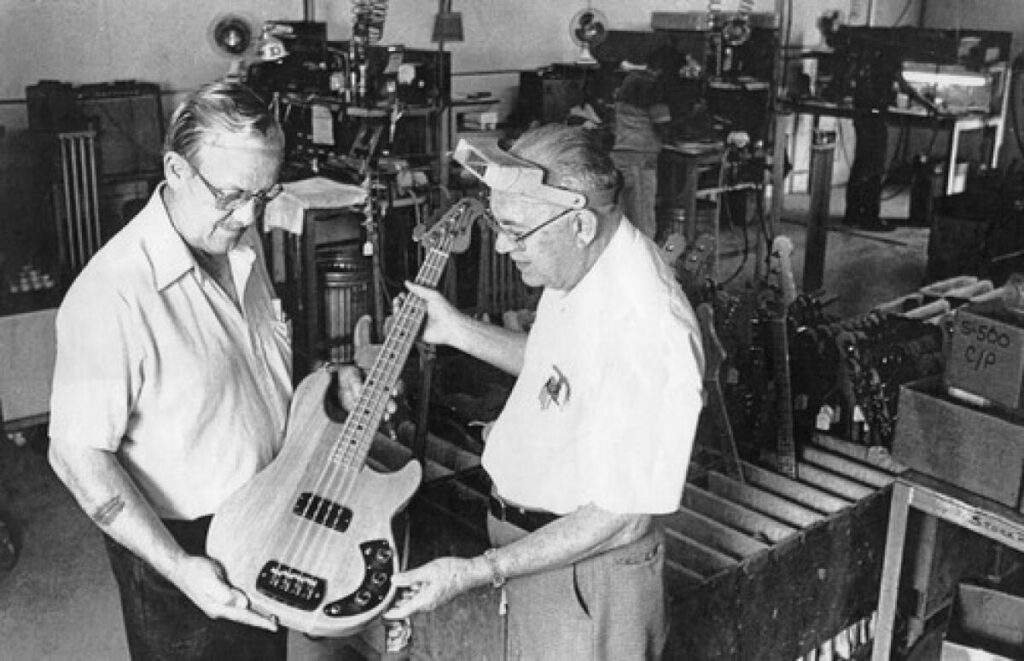
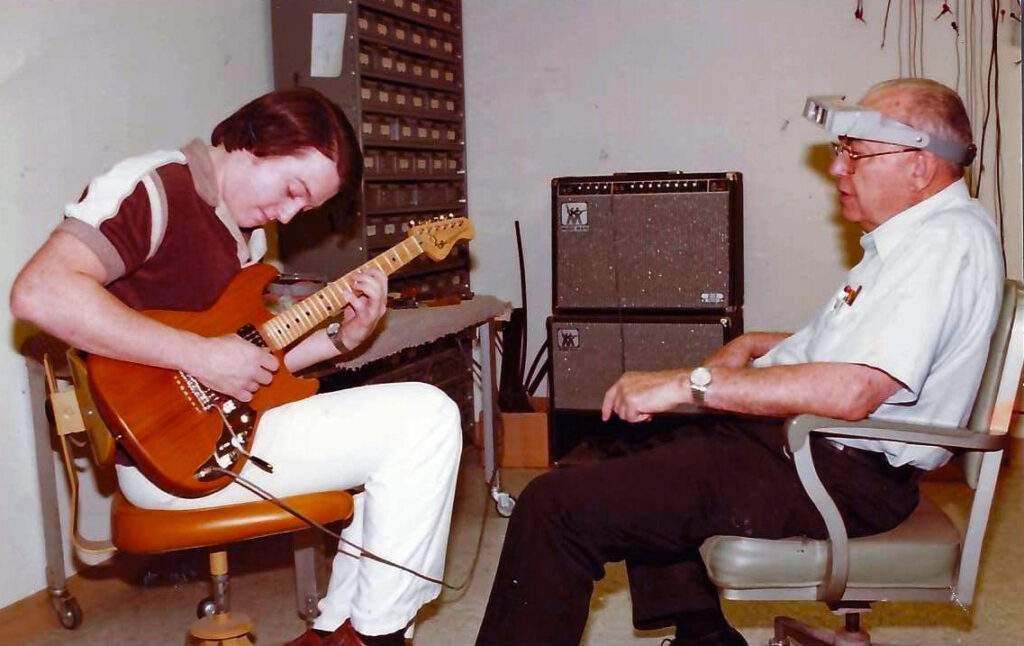
In 1980, after losing his first wife Esther to cancer, Leo married Phyllis and co-founded G&L Musical Instruments (George & Leo) with George Fullerton. Built on Fender Avenue in Fullerton, these instruments—designed by Leo until the end—are prized by collectors as spiritual successors to the pre-CBS golden era.
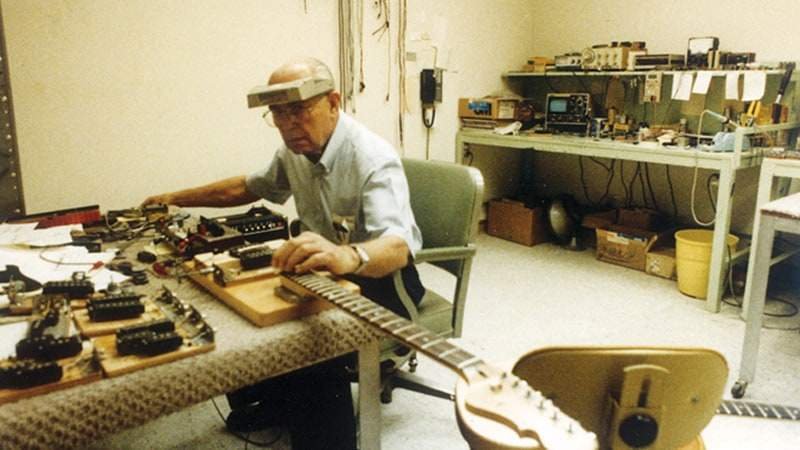
Parkinson's eventually challenged his hands, but Leo kept working. He went to the office daily until the day before his death on March 21, 1991, at age 81. Buried in his work shirt with pocket protector, he left behind an unfinished guitar on his bench—a fitting tribute to a life of endless tinkering.
Leo Fender received the National Medal of Arts from President George H.W. Bush and was inducted posthumously into the Rock & Roll Hall of Fame in 1992. The Hall's plaque says it all: rock and roll as we know it could not exist without Leo Fender.
Jeremy Hanson's masterful narration in The MR HANSoN Podcast captures not just the facts, but the soul of this unassuming genius—the accountant who out-engineered the musicians, the tinkerer who built empires from problems others only complained about. Visit www.MRHANSoNpodcast.com or search for the show on your favorite platform to experience the full cinematic episode.
Leo Fender proved that you don't need to play the music to change it forever. Sometimes, all you need is a bench, a pencil, and the stubborn belief that things can be made better. The chords he never played still echo through every amplifier, every stage, and every song that defines our era. ?
MR HANSON Podcast is a riveting journey into the deepest mysteries, shocking true crime cases, human resilience, survival stories, and unexplained phenomena — told with the best storytelling in the world, audio immersive soundscapes, original sound effects, and custom musical scores that pull listeners into the heart of every narrative.Each episode blends investigative storytelling, cold case mysteries, crime analysis, and astonishing real-world mysteries with premium cinematic production. Whether you’re drawn to unsolved mysteries, true crime investigation, survivor triumphs, or human resilience in the face of danger — MR HANSON delivers stories that grip your imagination and refuse to let go.
From vanished persons cases and eerie disappearances to unexplained phenomena, mystery storytelling, and thrilling narrative arcs, this podcast offers fresh perspectives you won’t hear anywhere else. With deep research, compelling narration, and immersive audio design, MR HANSON Podcast stands with top shows in the genre, combining mystery, true crime, and human victory stories in every episode.
New episodes weekly — subscribe now for captivating, edge-of-your-seat storytelling that feels like true crime meets cinematic audio drama.

The importance of American freedom traces back to 1776 — and historians say it still requires active civic maintenance today.

Information warfare and free speech are on a collision course. Here's how the government turned "misinformation" into a weapon against you.

New research reveals early humans may have used fire inside Wonderwerk Cave up to 1.79 million years ago — among the oldest evidence ever found.

Discover the hidden costs of AI data center expansion. Big Tech is draining local power grids and water supplies. Read the truth Stucci Media uncovered.

Exhausted by toxic politics? Discover Jeremy Hanson's MR HANSoN Podcast for inspiring stories, cinematic production, and real human triumphs.

Alpha-gal syndrome — the dangerous tick bite meat allergy — is surging in 2026. Learn symptoms, prevention, and how to protect your family from lone star tick red meat allergy.
No comments yet — be the first to weigh in.