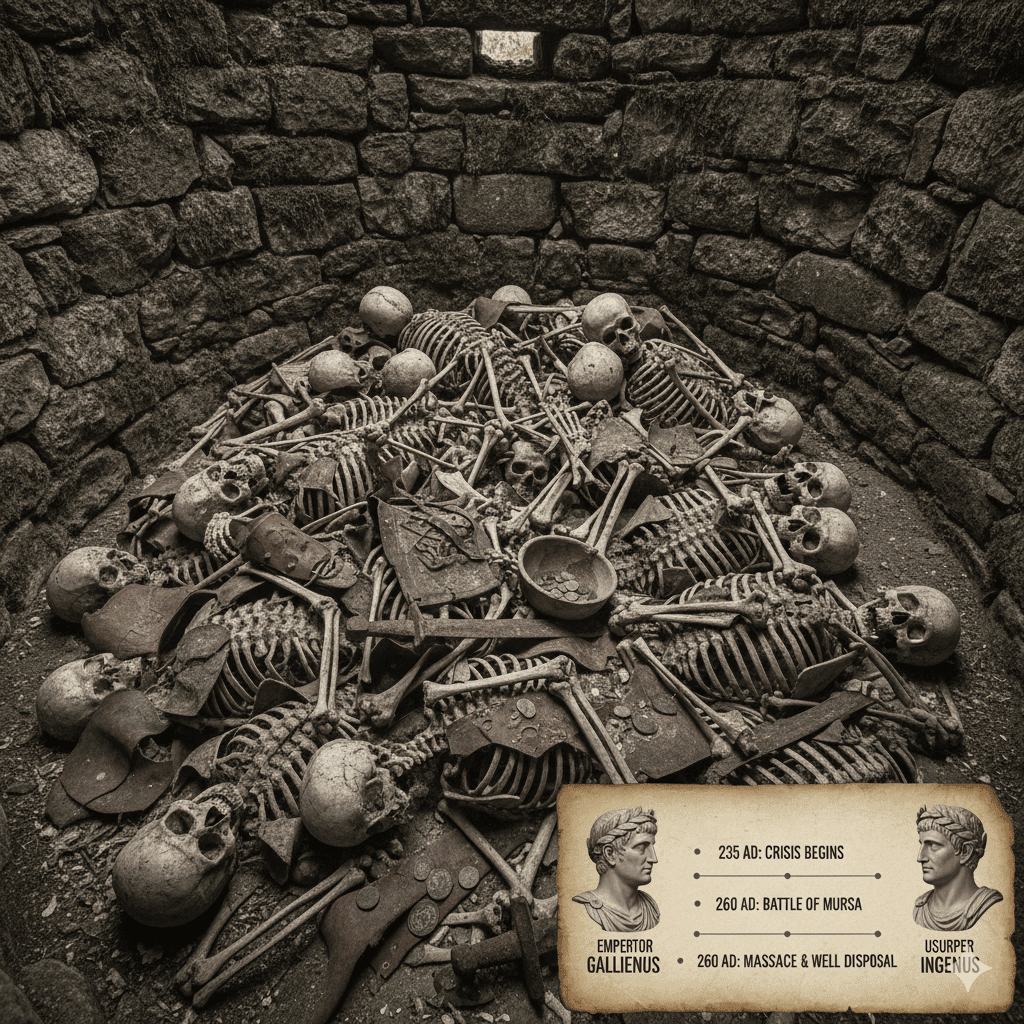
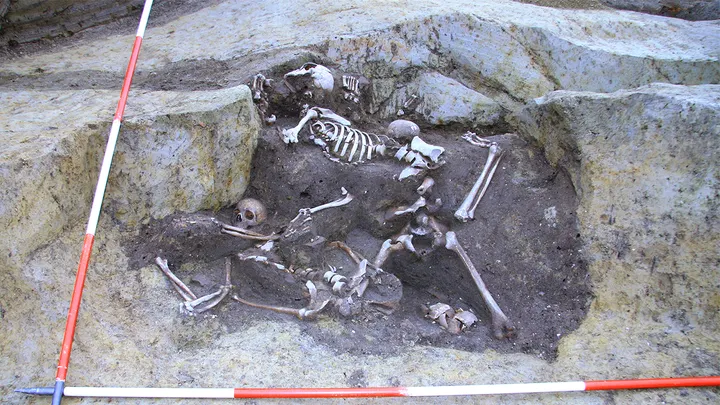
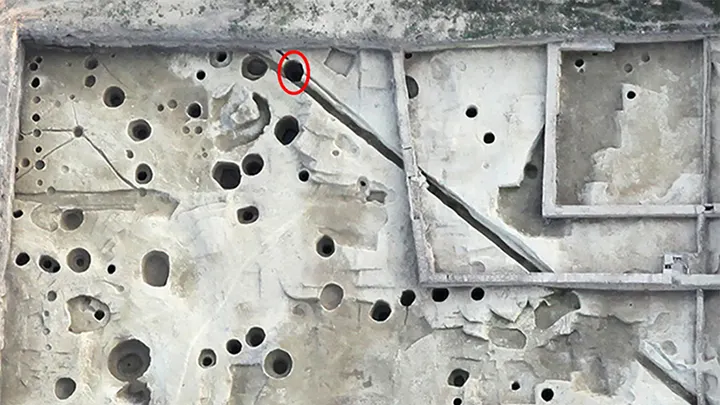
Novak added that it’s “quite unusual” to find similar graves strictly associated with warfare within the borders of the Roman Empire. “Mass graves associated with wars [and] battles are quite rare,” he noted, making this Croatian site a disturbing historical anomaly.
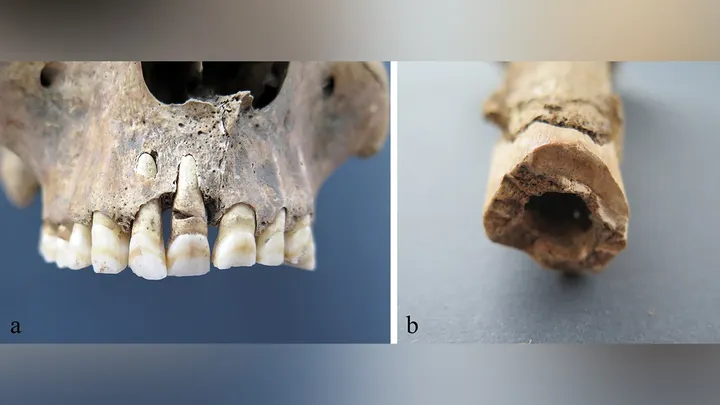
The study paints a picture of men who were hardened fighters long before their final day. Novak confirmed that many skeletons bore evidence of past, “nicely healed” injuries, indicating they led relentlessly violent lives. “They went through multiple episodes of violence,” he said, suggesting these were professional, battle-scarred warriors whose careers ended not in glory, but in a humiliating pit.
Human Interest
Imagine the final hours of these men. They were not foreign invaders but soldiers of Rome, fighting for a rebel emperor, Ingenuus, whom they believed offered a better, or at least stronger, path forward for the collapsing empire. They were men with diverse origins—a fighter from the cold Danube frontier, a grizzled veteran from Greece, a young recruit from the Balkans. They shared a last, desperate grain-based meal before joining the line of battle. They were united only by their allegiance to a lost cause.
Their final narrative is one of betrayal and swift, merciless justice delivered by the Roman state itself. They were stripped of their dignity, executed, and forgotten in a well—a stark, chilling reminder that in the ancient world, political failure didn't just cost you your life, it cost you your soul's passage to the afterlife.
Balanced Perspective
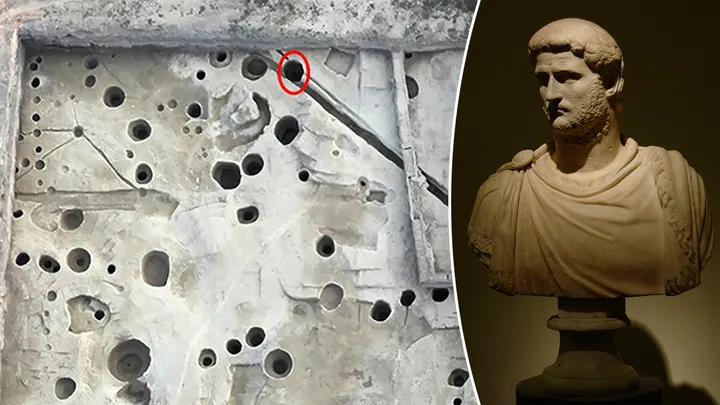
While the disposal was undoubtedly an act of savage humiliation—a victor’s statement of absolute authority—it must be viewed through the lens of the Crisis of the Third Century. This was a fight for the very survival of the Roman Empire. Emperor Gallienus faced over a dozen usurpers and numerous major invasions. His merciless treatment of Ingenuus' followers was not merely sadism; it was a calculated political tactic designed to establish stability through overwhelming fear.
In the context of that chaotic age, where the state was fractured and loyalty was fleeting, Gallienus made a ruthless choice: to terrify future rebels into submission. While morally repugnant by modern standards, the act served the political objective of securing Gallienus’ reign and preventing the total breakdown of the Roman administration. It was a dark moment, but a defining one for the era.
Conclusion
The Mursa well discovery offers an unflinching look at the ultimate consequence of civil strife. It strips away the romanticism often draped over antiquity, replacing it with the brutal truth of power. These stacked bodies serve as a silent, powerful monument to the crushing finality of a Roman Empire Battlefield Defeat, ensuring that the forgotten soldiers of a lost rebellion finally have their story told.
FAQ Section
Q: Where was this shocking mass grave of stacked warriors found? A: The mass grave was discovered in Croatia, just outside the ancient city of Mursa, which is now modern-day Osijek.
Q: What specific conflict led to the Roman Empire Battlefield Defeat? A: The bodies are linked to the Battle of Mursa in 260 AD, where the forces of the legitimate Emperor Gallienus defeated the rebel general Ingenuus during the turbulent Crisis of the Third Century.
Q: Why were the bodies dumped into a well? A: Archaeologists, including Dr. Mario Novak, believe the bodies were deliberately dumped into the stacked warriors well as an intentional act of ancient war humiliation, denying the defeated soldiers a proper burial ceremony.
Q: How did researchers confirm the men were soldiers of the losing side? A: The men were determined to be of the losing side because their bodies had been stripped of valuables and they were denied ritual burial. As Dr. Novak explained, had they been part of the winning army, they would have been interred in formal graves.
Q: What does this discovery tell us about the Emperor Gallienus victory? A: The discovery suggests that the Emperor Gallienus victory was followed by a merciless suppression of the rebels, using extreme public degradation as a political tool to deter any further challenges to his imperial authority.
Don't let the mainstream media whitewash history. For fearless, fact-driven analysis on geopolitics, conservative values, and the lessons of the past, subscribe to Stucci Media today. Truth is power.